








How video telematics works in Bangladesh
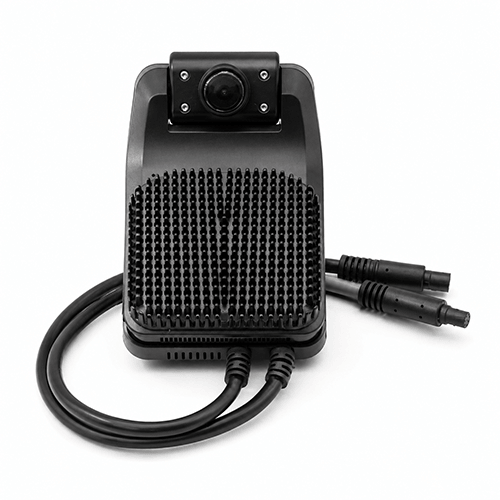
Modern video telematics merges 4G LTE high-speed cellular networks with high-performance on-device neural processing units (NPUs). The forward camera scans 30 frames per second for roadway risks (pedestrians, vehicles, lane drift), while the cabin-facing camera uses infrared LEDs to track eye focus, head tilt, and phone use even in total darkness.
When safety thresholds are crossed, two things happen simultaneously: the driver receives a sub-second audio warning inside the cab to correct the behavior, and a tamper-proof 20-second video clip is encrypted and pushed directly to the cloud dashboard with exact GPS speed and coordinates.